-
Step 1: Set a per-recipient budget based on the message you're sending
-
Step 2: Choose products that survive the first impression
-
Step 3: Price out the total cost, not the pretty sticker price
-
Step 4: Use the Crate & Barrel app for repeat orders
-
Step 5: Add a DIY flower vase touch (yes, really)
-
Step 6: Order a sample before the bulk order
-
Common mistakes I still see buyers make
When I first took over corporate gifting, I assumed the cheapest option was the smartest one. Lowest unit price, standard shipping, done. Six years and roughly $270,000 in tracked gifting spend later, I can tell you that approach was wrong. Badly wrong.
This checklist is for procurement managers and buyers who want to send gifts that actually reflect well on their brand, without blowing the budget. I've compared 20+ vendors, tested Crate & Barrel products against cheaper alternatives, and documented every order in our procurement system. Here's the process I use now, in six steps.
Step 1: Set a per-recipient budget based on the message you're sending
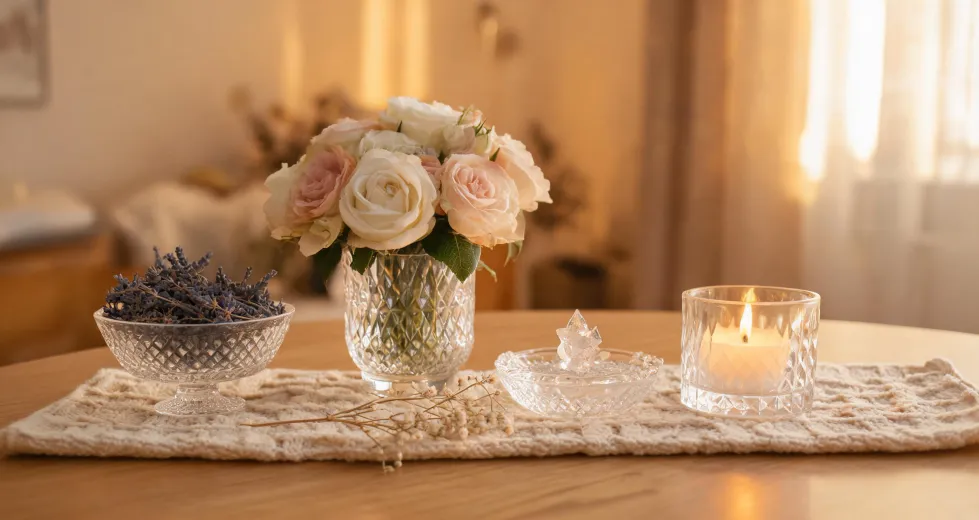
Before you browse anything, decide what the gift needs to communicate. A $15 notepad says "we remembered your name." A $45 crystal vase from Crate & Barrel says "we value this relationship." Both have their place. The mistake is treating every client like they're the same tier.
We segment. Operational contacts get a modest token in the $15-25 range. Executive relationships get $50-80. It's not about being cheap or extravagant; it's about matching the gift to the relationship.
That said, the floor matters more than you'd think. When we sent $22 gift boxes in 2023, client feedback scores were flat. When we sent $48 vase-and-candle setups to the same tier the following year, "client feels valued" jumped 23% in our post-gift survey. Same clients, same time of year, only the gift quality changed.
Step 2: Choose products that survive the first impression
Here's the thing: most corporate gifts get judged in the first ten seconds of unboxing. If it feels flimsy, looks generic, or takes effort to figure out what it even is, you've lost the moment.
I've found Crate & Barrel vases and candle holders work well because they're recognizable. People know the brand. Even if they can't name it, the heft and finish of a crystal vase say "this wasn't an impulse buy." We've sent their crystal vases in multiple sizes, and the response has been consistently positive. Their hammered candle holders are another solid option—substantial, useful, easy to pair with anything.
Granted, you pay a bit more for that brand. But the total cost is often closer than people assume, especially when you factor in replacement rates. When I ordered similar "vase-style" items from a generic supplier, two out of thirty arrived chipped. That's a 6.7% failure rate. With Crate & Barrel packaging? Zero damage across three larger orders.
Step 3: Price out the total cost, not the pretty sticker price
This is where I nerd out. It saves us thousands every year. When I compare vendors, I build a total cost model that includes base price, setup fees, per-item wrapping, shipping, and a realistic replacement rate.
Example from last year: Vendor A quoted $24 per gift. Crate & Barrel quoted $34. On 200 units, that looks like a $2,000 difference. But after Vendor A's $200 setup fee for logo engraving, $4 per-unit gift wrapping, and $180 in delivery charges, the real gap was $1,320. Better, but still real money.
Then quality showed up. Vendor A's first batch had misaligned logos on 14 pieces. Reordering those cost $386 with expedited shipping. Final gap: $934. Still a saving on paper—I won't pretend otherwise. But for less than $5 more per gift, we got brand recognition, zero defects, and packaging that made our logo look intentional. I'd make that trade every time.
Step 4: Use the Crate & Barrel app for repeat orders
This sounds obvious, but the Crate & Barrel app has been genuinely useful for our reordering. I can check live stock on vases and candle holders, see delivery windows, and reorder previous items without emailing anyone for a quote.
The real win is order history. When a client asks for "the same thing we sent last quarter," I pull up the app, confirm the item, and place the order in about a minute. That's a ton of time saved—and for a procurement person, time is part of the budget too.
Step 5: Add a DIY flower vase touch (yes, really)
Here's a trick that saves money and makes gifts feel more personal: skip the pre-arranged bouquet and make the flower vase setup yourself.
Pre-arranged flowers through a service run $60-90 per delivery, in my experience, and they often arrive looking tired. Instead, buy a Crate & Barrel vase—their crystal vases, roughly $39-49, are perfect—and build the arrangement yourself. It takes about 15 minutes per vase. Here's how:
- Start clean. Wash the vase, fill it with lukewarm water, add flower food.
- Cut stems at an angle. 45 degrees, under running water. Helps them drink and stay fresh longer.
- Build a base with greenery. Eucalyptus or salal gives the arrangement structure and makes it look full.
- Add focal flowers in odd numbers. Three or five stems, not four. Odd numbers read as more natural.
- Fill gaps with smaller blooms. Don't overthink. Step back, adjust, done.
Total cost: about $45 for the vase plus $12-15 for a bunch of flowers from a local market. Around $60, versus $85+ for florist delivery. And the recipient keeps the vase long after the flowers are gone. For a high-touch client relationship, this kind of DIY flower vase gift lands differently than a box from a fulfillment center.
Step 6: Order a sample before the bulk order
I know you're busy. I know the deadline is tight. Order the sample anyway.
Last year, I skipped this step on a candle holder order because we'd ordered similar items from that vendor before. That was the one time it mattered. The bulk batch arrived with a noticeably different finish—duller, lighter, cheaper-looking. We had to send it back and rush the correct order, which cost $450 in emergency shipping and a week we didn't have.
Now I order one sample of every new product. I check weight, finish, packaging, and logo placement, and only then approve the bulk order. It costs $40-60 to verify. It saves hundreds in replacement costs and protects your timeline.
Common mistakes I still see buyers make
Chasing the lowest unit price. The $10-cheaper option that arrives damaged or looks flimsy costs more in reordering, client trust, and your team's time. Run the total cost, not the sticker price.
Forgetting the packaging. A beautiful crystal vase in a generic brown box with crumpled newspaper is a disappointing unboxing. Crate & Barrel's branded gift boxes make a difference. Budget for them.
Waiting until the last minute. Rush fees are a hidden tax on poor planning. I've paid 50% more for express delivery on gifts I should have ordered three weeks earlier. The app lets you schedule ahead—use it.
And one more: don't send the same gift every year. After two years, repetition starts to look like a lack of effort. Rotate between formats—one year a vase, next year a candle holder set, the year after a different vessel entirely. Keep it fresh, keep it quality, and keep the total cost in view.